
When we talk about feelings, music hits different than anything else. Sure, words matter, but music? Music goes straight to the soul. So when the early internet was figuring out what it wanted to be—beyond its military origins and basic communication—one thing always fascinated me personally.
The ability to play music on a computer.
Now, before you roll your eyes at this old guy reminiscing, hear me out. This wasn’t just about convenience. This was about revolution disguised as MP3 files.
The Primitive Days: MIDI and the CD-ROM Era
In the beginning, there were MIDI sounds. If you’ve never experienced the joy of 16-bit audio pretending to be a symphony orchestra, you missed out on some truly hilarious musical moments. Everything sounded like it was being played by a very talented robot having an off day.
Then came CD-ROMs, and suddenly we could store actual music on computers. Revolutionary? Absolutely. Convenient? Well, you still needed to physically insert a disc like some kind of digital caveman.
But when things really took off—when the internet learned to sing—that’s when everything changed.
The Wild West: Napster and the Great Music Liberation
Here’s where it gets interesting (and legally questionable). For us young people back then, the ability to download any song we wanted for free was nothing short of magical. Illegal? Absolutely. Did we care? Not particularly.
Napster was our digital Robin Hood, redistributing music from record labels to teenagers with dial-up connections and way too much time. Along with other peer-to-peer networks, it created this incredible ecosystem where a kid in suburban Germany could share their favorite underground band with someone in rural America.
Looking back, we were basically participating in the world’s largest music-sharing experiment. Record executives called it piracy. We called it Tuesday.
From Walkman to iPod: The Hardware Evolution
Let me paint you a picture of 90s peak technology: the Walkman. This beautiful yellow sports model was my non-plus-ultra—basically the coolest thing you could own that didn’t require a driver’s license.
The whole system worked with these things called cassettes (ask your parents). You could record your own, but it was a dark art involving precise timing, prayer, and hoping the radio DJ didn’t talk over your favorite song. Most of the time, you just bought pre-recorded ones and called it a day.
Then Apple happened.
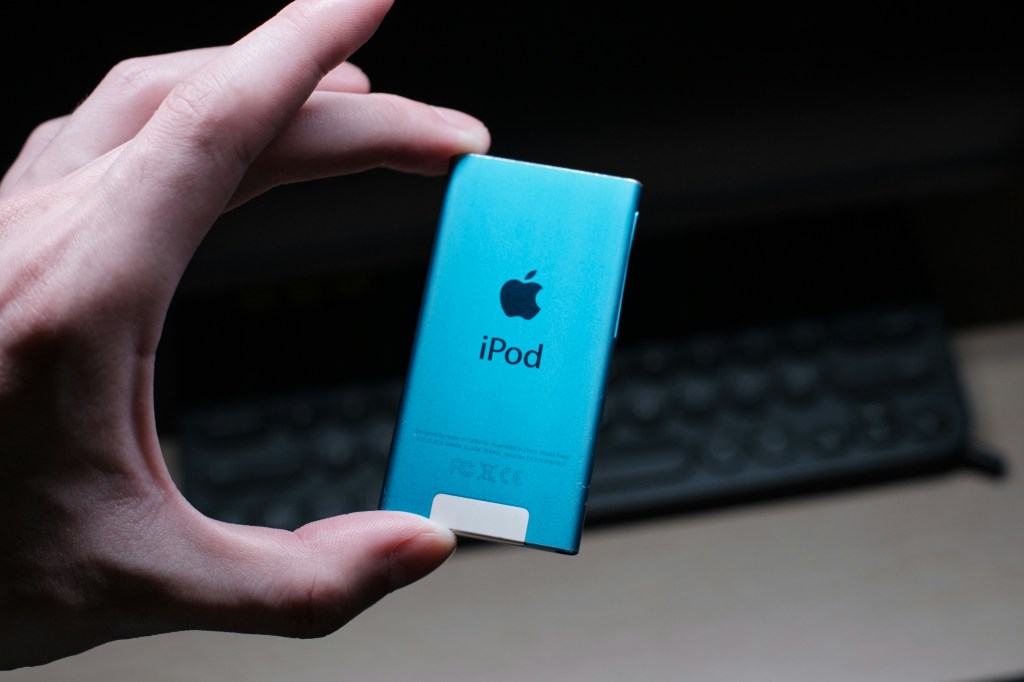
The iPod wasn’t just a music player—it was a revelation. Suddenly, you could download pretty much anything via iTunes and organize it into playlists like you were curating your own personal radio station. No more rewinding. No more hoping the tape didn’t get eaten by an angry machine.
I’d argue the iPod was basically the smartphone’s older, more focused sibling. It did one thing incredibly well: make your music portable and organized. When Apple later decided to mate the iPod with a cell phone, boom—the iPhone was born.
The Streaming Revolution: From Ownership to Access
Fast forward to today, and we’ve come full circle in the weirdest way possible.
Remember when owning music meant something? When you’d carefully curate your CD collection and feel genuine pride about that rare import single you tracked down? Now we have access to basically every song ever recorded, and somehow that feels both amazing and slightly hollow.
Spotify, Apple Music, YouTube Music—they’ve turned music into a utility like water or electricity. Always there, always flowing, completely taken for granted until the wifi goes down and you realize you can’t actually play any of your “favorite” songs without an internet connection.
But here’s the thing: this convenience has democratized creativity in ways we never imagined. Any time inspiration strikes—whether you’re coding at 2 AM or walking through a Danish forest (yes, that’s still my go-to thinking spot)—you can instantly access the exact soundtrack your mood requires.
The Bigger Picture: Digital Assets Before We Had a Name for Them
From my perspective as someone who’s been building on the internet since day one, the digitization of music was one of the most important disruptions we witnessed. We just didn’t realize it at the time.
We were essentially creating the blueprint for all digital assets—proving that intangible goods could have real value, that distribution models could be completely reimagined, and that consumers would eagerly adopt new technology if it solved real problems.
Music on the internet taught us about:
- Digital scarcity (limited iTunes downloads)
- Subscription models (Spotify’s monthly fees)
- Platform dependency (lose your account, lose your library)
- The difference between ownership and access
Sound familiar? We’re having the same conversations today about NFTs, streaming content, and cloud storage.
What This Taught Me About Innovation
The music industry’s digital transformation revealed something crucial about how innovation actually works: it’s messy, it’s often driven by rule-breakers, and the establishment always fights back before eventually joining the revolution.
Napster was “destroying the music industry.” iTunes was “too expensive.” Streaming would “never work.” Yet each disruption solved a real human problem: we wanted our music instantly accessible, perfectly organized, and shareable.
The companies that thrived weren’t necessarily the ones with the best technology—they were the ones that understood human behavior. Apple succeeded because they made legal music downloads easier than illegal ones. Spotify won by making access more valuable than ownership.
A Personal Soundtrack
By the way, if you’re curious about what soundtrack accompanies this particular Danish entrepreneur’s daily routine, I’ve put together a small playlist of my current favorites. Fair warning: it’s an eclectic mix that ranges from coding background music to “walking through forests contemplating the future of technology” tracks.
[https://open.spotify.com/playlist/6W2XmbzpHXdHRkmOv9l8vj?si=c77ddb79ccf740a3 — feel free to judge my taste accordingly]
The Beat Goes On
Looking back at this journey—from MIDI files to streaming everything—I’m struck by how music led the way for almost every digital transformation we’ve seen since. Social networks, video streaming, gaming, even my current work with Identiqa: they all borrowed lessons learned from putting songs on the internet.
The next time Spotify suggests a song that perfectly matches your mood, or when you create the perfect coding playlist, or when you discover new music through an algorithm that somehow knows your taste better than you do—remember that all of this started with a simple idea: what if we could play music on computers?
Turns out, when you combine human emotion with digital innovation, you get something pretty magical. Even if it occasionally sounds like MIDI.
What was your first digital music experience? Napster downloads, iTunes purchases, or were you born into the streaming age? I’d love to hear how music found its way into your digital life.



 Techland